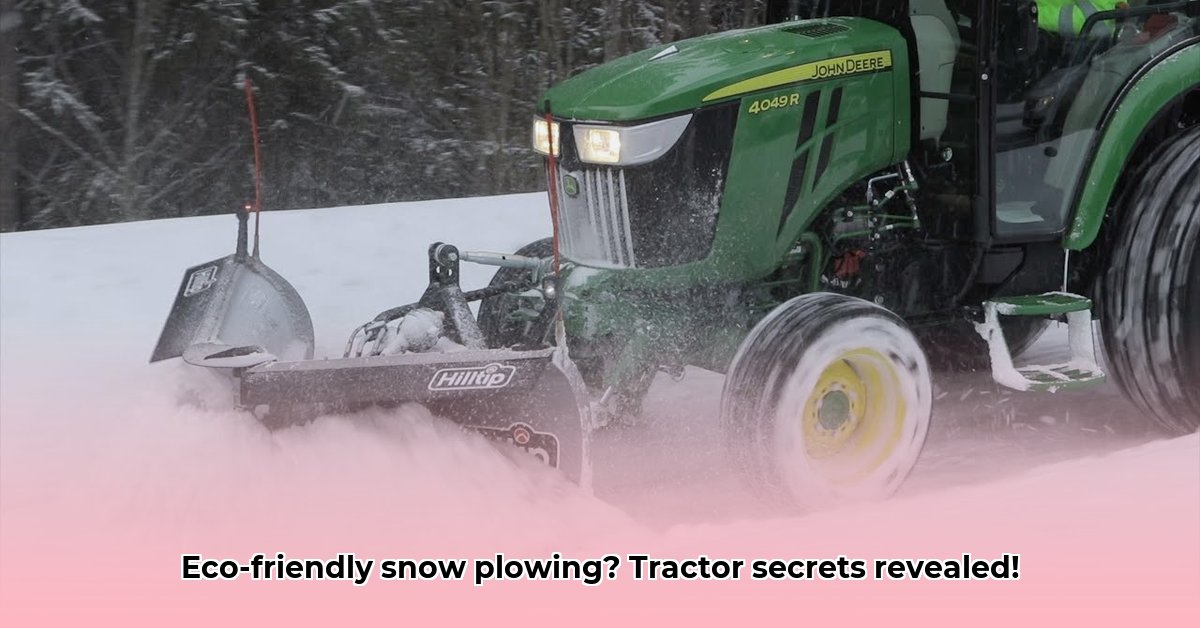
Winter's arrival brings challenges to farm operations, with snow accumulation hindering accessibility and potentially impacting livestock and crop yields. Tractor-based snow removal offers an efficient solution; however, choosing the right method and equipment is crucial for both effectiveness and environmental sustainability. This guide compares different approaches, providing actionable steps and a risk assessment to help farmers make informed decisions. For Kubota owners, check out this snow removal guide.
Choosing the Right Tractor for Snow Removal: Size and Power Considerations
Selecting the appropriate tractor hinges on farm size, typical snowfall, and budget. Smaller farms benefit from compact tractors, known for their maneuverability and suitability for smaller areas. These are cost-effective and easier to handle, akin to using a smaller, more agile vehicle for maneuvering in tight spaces. Conversely, larger farms often require larger tractors with front-mounted buckets, providing the power needed for extensive snow removal similar to the heavy-duty capabilities of a bulldozer on a highway.
The decision-making process involves evaluating several factors: farm acreage, average snowfall, budget constraints, and the anticipated duration of snow removal activities. Consider ongoing maintenance costs and energy consumption – a larger tractor will generally require more fuel. Moreover, assess the potential environmental impacts of each option.
Assessing Snow Removal Needs: A Personalized Approach
Before investing in equipment, a thorough assessment of your farm's specific needs is essential. How much snow typically accumulates? What's the terrain like (slopes, hills, obstacles)? Are there environmentally sensitive areas to consider (wetlands, streams)? Answering these questions helps determine the most appropriate equipment and snow removal strategy. Careful planning minimizes disruption to the landscape and improves operational efficiency.
Sustainable Snow Removal: Minimizing Environmental Impact
Environmental responsibility is paramount in modern farming. Gas-powered tractors, while effective, contribute to air pollution and greenhouse gas emissions. Here’s how to mitigate the environmental impact:
Maximize Fuel Efficiency: Operate the tractor efficiently, avoiding idling and unnecessarily aggressive maneuvers. Regular maintenance ensures optimal engine performance, reducing fuel consumption and emissions. Consider using a fuel-efficient tractor model. How can I minimize fuel consumption during snow removal? This is a question every environmentally-conscious farmer should be asking.
Reduce Soil Compaction: Heavy tractors can compact the soil, hindering drainage and plant growth. Minimize the number of passes over the same area and consider lighter tractors where feasible.
Microplastic Mitigation: Snowplow blades can release microplastics into the environment. Research is ongoing to develop more sustainable materials for snow removal equipment. What are the potential long-term consequences of microplastic release from snow removal equipment? Understanding this helps drive demand for improved solutions.
Explore Alternative Fuels: Investigate alternative fuels such as biodiesel or renewable diesel fuels to reduce your farm’s carbon footprint. Their increasing availability provides practical and environmentally sound choices.
Actionable Steps: A Practical Guide to Sustainable Snow Removal
Implementing sustainable snow removal follows a structured approach:
Comprehensive Assessment: Evaluate farm size, typical snowfall, terrain, and environmental sensitivities.
Equipment Selection: Choose a tractor (compact or larger) that aligns with your needs and budget.
Efficient Plowing Techniques: Minimize repeated passes, avoid excessive speed, and exercise caution near sensitive areas. Dr. Emily Carter, Professor of Chemical and Biomolecular Engineering at Princeton University, emphasizes the importance of "precise and targeted snow removal to minimize environmental disruption".
Regular Maintenance: Ensure optimal fuel efficiency and prevent breakdowns through scheduled maintenance.
Sustainable Alternatives: Explore bio-based hydraulic fluids and investigate the use of alternative and renewable fuels.
Risk Assessment Matrix for Snow Removal Methods
Snow removal carries inherent risks. The following matrix assesses potential hazards associated with different methods:
| Method | Risk Factor | Probability | Severity | Mitigation |
|---|---|---|---|---|
| Compact Tractor | Mechanical Failure | Medium | High | Regular maintenance, readily available spare parts |
| Larger Tractor/Bucket | Soil Compaction | High | Medium | Minimize passes, strategic route planning |
| Both Systems | Operator Error | Medium | High | Thorough training, established safety protocols |
| Both Systems | Environmental Damage | Low | High | Sustainable practices, avoidance of sensitive areas |
Comparative Analysis of Snow Removal Methods
Different snow removal methods offer varying advantages and drawbacks:
| Method | Pros | Cons | Environmental Impact |
|---|---|---|---|
| Gas-Powered Tractor | Powerful, readily available, relatively low initial cost | High emissions, high fuel consumption, noise pollution | High |
| Electric/Hybrid Tractor | Lower emissions, quieter operation, reduced long-term fuel costs | Higher initial cost, range limitations (depending on battery technology) | Low |
| Brine Solutions (Salt Alternatives) | Environmentally friendly (compared to rock salt), less infrastructure damage | May require specialized equipment, effectiveness depends on conditions | Relatively Low |
| Manual Snow Removal | No emissions, low cost | Labor-intensive, time-consuming, inefficient for large areas | Very Low |
Minimizing the Environmental Impact of Tractor Snow Removal in Sustainable Farming
Traditional methods often involve gas-powered tractors and chemical de-icers, releasing pollutants into air and water. Sustainable alternatives include:
Electric or Hybrid Tractors: These significantly reduce greenhouse gas emissions, representing a long-term investment in both environmental stewardship and farm profitability.
Optimized Plowing Techniques: Strategic route planning and careful snow removal minimize fuel consumption and habitat disruption. Efficient plowing techniques are essential for sustainability in snow removal.
Brine Solutions: These are less damaging to the environment compared to rock salt. "Brine solutions offer a crucial alternative to traditional de-icing agents which often result in considerable water pollution," notes Dr. Anya Petrova, Environmental Scientist at the University of California, Berkeley.
Preventative Measures: Regular snow clearing prevents extensive build-up, reducing the need for extensive plowing.
The choice of snow removal method depends on individual farm circumstances and available resources. By incorporating sustainable practices, farmers can maintain efficient operations while protecting the environment. Continuous learning and adaptation to emerging technologies and best practices are crucial for long-term success and sustainability.